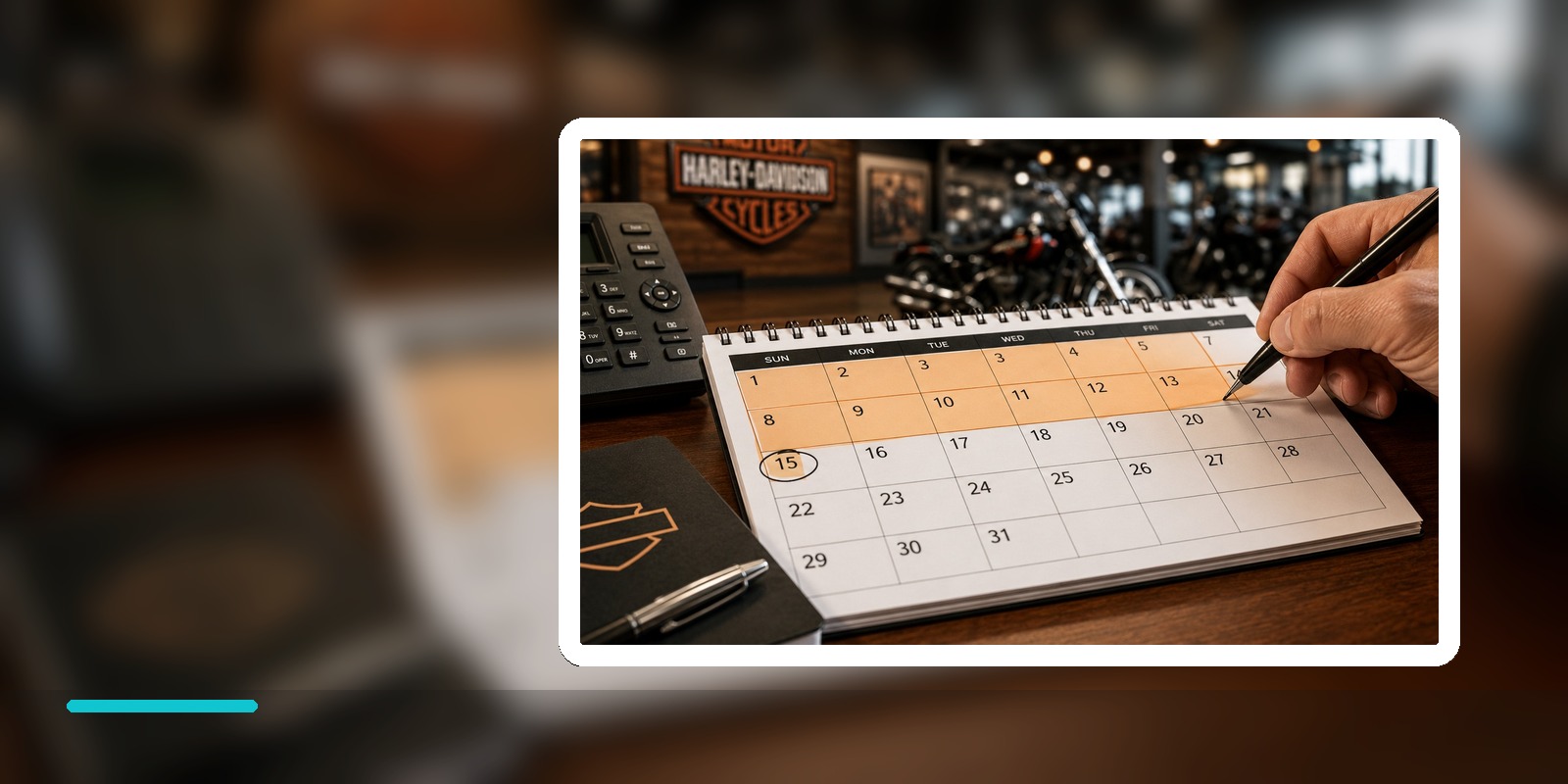
The first fifteen days are operationally expensive.
A serious lead-handling process is not a single phone call followed by an email template. The early cycle needs repeated human contact across phone, text, email, and video, with each touch adding something different. The customer may ignore the first three attempts and respond to the fourth because the timing changed, the message changed, or the dealership finally gave them a reason to engage.
This is where good intentions collide with dealership reality. The volume of tasks multiplies quickly. One hundred leads do not create one hundred follow-ups; they create hundreds of separate decisions about timing, channel, message, content, appointment opportunity, and when to try again.
What the heavy cycle has to accomplish.
Persistence only works when the message evolves.
A heavy cycle cannot feel like a robot asking the same question every day. The conversation has to move. Inventory can change. Events happen. Promotions appear. A trade question becomes relevant. A manager can introduce a second face. A new video can show the motorcycle again. The dealership can create reasons to reconnect without pretending the customer replied when they did not.
That is the difference between persistence and repetition. The workload is not merely making more attempts; it is maintaining relevance across those attempts.
The standard is demanding because it should be. Pipeline BDC is built to provide the people, process, follow-up, and measurement required to execute it consistently while the dealership team stays focused on selling.